

Our story
Rare Expertise, Unmatched Craftsmanship
Building or repairing a recreational vehicle or caravan isn't just about one skill—it’s about bringing together structural integrity, fine woodworking,
specialised composite materials, and utilities (gas plumbing & electrical) under one roof.
With decades of hands-on experience in the UK RV and caravan industry, I offer a level of comprehensive technical knowledge and craftsmanship
that is exceptionally rare in the industry today.
Master Craftsmanship & Structural Construction!
Cabinet Making & French Polishing: With an apprenticeship of being classically trained in fine woodworking and traditional French polishing!
I deliver high-end interior cabinetry, bespoke joinery, and flawless surface finishes that set custom builds apart.
Fully Certified Electrical, Gas & Plumbing Systems
When it comes to off-grid systems and living amenities, safety and compliance are paramount:
Electrical Qualified (Since the 1990s): Decades of experience designing, installing, testing, and troubleshooting
complex 12/24/48vV DC off-grid battery/solar systems and 230V AC mains installations.
CORGI & Gas Safe Registered: Fully qualified for all scopes of domestic and mobile gas work, including LPG (Liquefied Petroleum Gas) systems.
Whether it’s absorption fridges, air/water heaters, pipelines, or cookers, every installation is completed to strict safety standards.
Complete Plumbing Integration: Expert installation and maintenance of fresh, grey, and black water systems, pumps, filtration, and water heating units.
Construction with Complete Confidence
Because I hold true master-level qualifications across woodworking, composite repair, electrical, plumbing, and LPG gas, we don't need to juggle multiple contractors or worry about modern safety standards being compromised,
For decades, the industry standard was a timber frame wrapped in thin aluminium. It’s heavy, it rots, and it conducts heat like a frying pan.
I first worked on Composite caravans made by Hymer ( who started composite caravans in 1970s)
In the 1990s, our first RV caravan business “Mobile caravan servicing” starting with and working out of a
second hand RAC orange transit, repairing and rebuilding accident damaged in the UK, culminating in over 30 mobile engineers and becoming one of the first authorised repair agents for Hymer composite vans in the UK, also Alde hydronic service agents owing to being Gas Certified and Truma authorised Install repair agents!
If you are heading to the desert or the Arctic, you need
12 Volts Can Start a Fire: A Sparky’s Guide to Expedition Power
"It's just 12-volt, it can't hurt you."
I hear this all the time. As a qualified electrician, let me tell you: 12-volt DC current, when pushing 300 amps through a loose crimp, acts like a welding torch.
In the caravan world, electrical systems are often an afterthought. In the expedition world, your electrical system is your life support. It runs your water purification, your navigation, your communications, and your heating.
When I wire a habitation box, I treat it like an offshore boat, not a camper.
Vibration is the Enemy:
I don't use solid core wire. I use marine-grade tinned copper (multi-stranded) because it resists corrosion and vibration fatigue. Every connection is crimped with hydraulic tools, not soldered (solder creates brittle points).
Redundancy is Key:
One system failure shouldn't kill the trip. If the solar fails, we have DC-DC charging. If that fails, we have a generator input.
The "Clean" Install:
You shouldn't need a wiring diagram to figure out what fuse blew. I label every wire, use proper busbars, and oversized cables to prevent voltage drop.
If you are building a truck to go off-grid for weeks, "good enough" wiring isn't good enough.
Water Leaks Sink Ships (and Rot Trucks)
As a licensed plumber and gas fitter in Europe since the 1990’s
I have a simple rule: No hidden joints.
In a standard RV, you often find plastic push-fit connectors buried deep inside walls or under floors. If they vibrate loose, you don't know until the floor rots out.
In my expedition builds, I design the plumbing schematic before I cut a single panel.
Filtration:
You can’t trust the tap water in remote villages or from the well 26 on the canning stock route so I install three-stage filtration systems (Sediment, Carbon, UV) that are industrial grade, not the flimsy plastic ones you buy at a camping store.
Gas Safety:
Propane is heavier than air. If you have a leak in a sealed composite box, the gas pools at the floor. If your "gas locker" isn't perfectly sealed and vented to the atmosphere, you are sleeping on a bomb.
I pressure test every gas line to 2x the working pressure and hold it for 24 hours. Why? Because I sleep better knowing my clients will wake up in the morning.
(all gas installations in Australia are certified by a licenced installer)
The Death of the "Stick and Tin" Camper
For decades, the industry standard was a timber frame wrapped in thin aluminium. It’s heavy, it rots, and it conducts heat like a frying pan.
I first worked on Composite caravans made by Hymer ( who started compost caravans in 1970s)
in the 1990s repairing and rebuilding accident damaged in the UK with our fiest caravan buisness
Mobile caravan servicing working out of a second hand RAC orange transit!
If you are heading to the desert or the Arctic, you need
Thermal Efficiency.
This is why I exclusively build with closed-cell composite sandwich panels.
No Thermal Bridges:
For habitations traversing the globe our habitation boxes have no metal connecting the outside wall to the inside wall. Metal transfers cold. By eliminating it, we stop condensation. Condensation leads to mold, and mold is a health hazard in a small space! Now we manufacturing in Australia Cold is not the enemy so we manufacture two the Outback overlander and the global overlander both very similar but with customs design elements for Australia and its unique unforgiving Outback!
Structural Rigidity:
The furniture in my builds isn’t screwed into the wall; it is bonded to the structure. The cabinetry becomes part of the integrity of the box.
We aren't building caravans anymore.
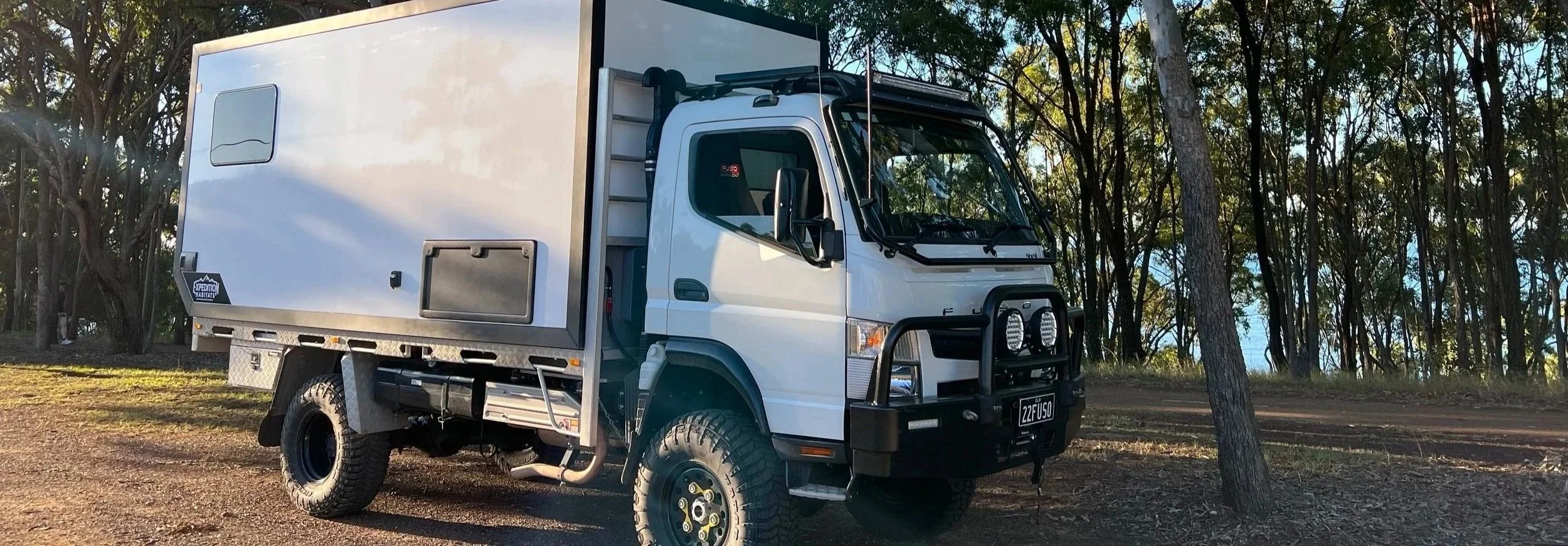
We are building Habitations capable of traversing the globe.
And quality is the only currency that matters out there!