

Fuso Canter
4×4 Expedition Habitat
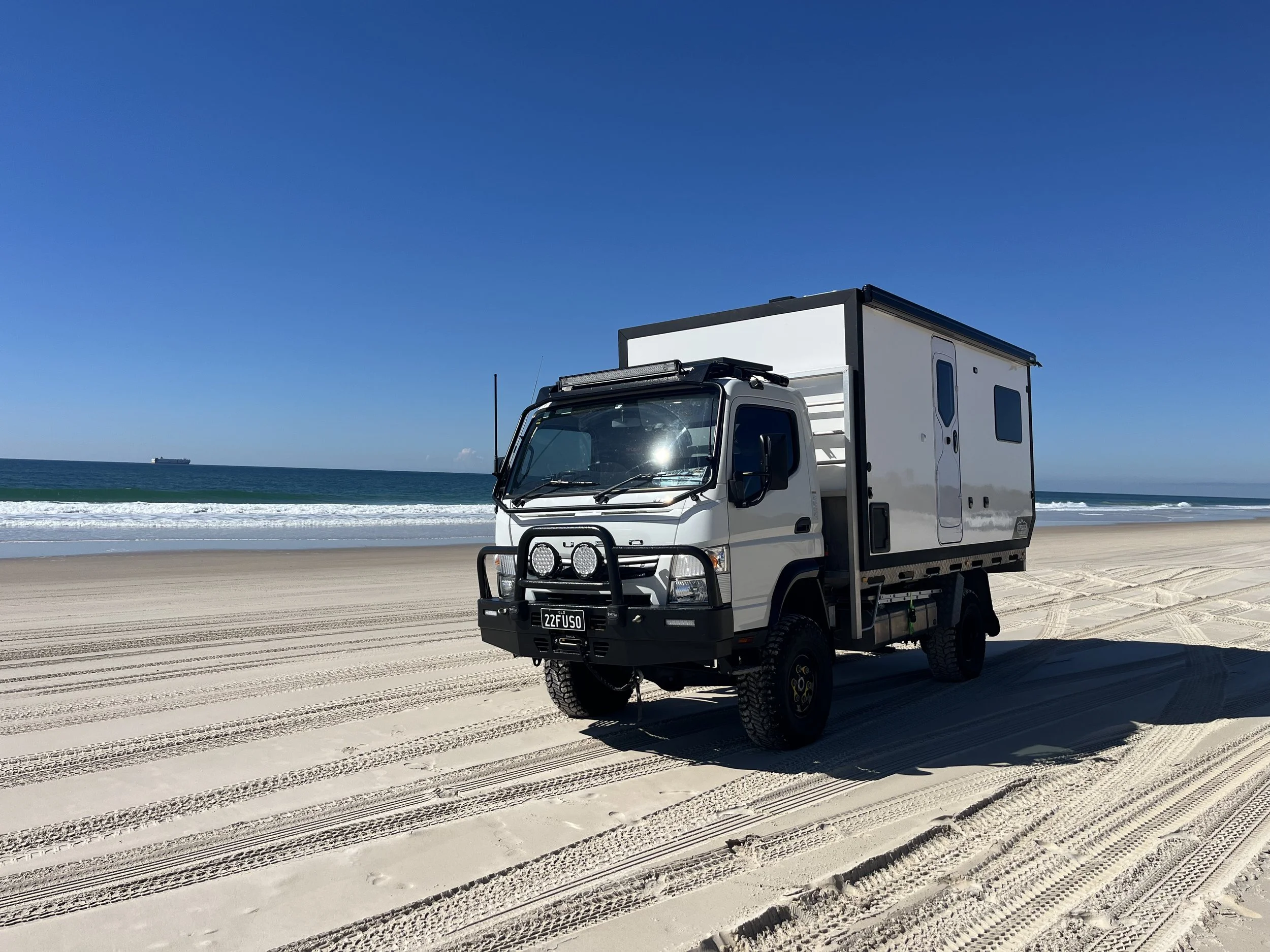
A composite habitation box, engineered in Queensland and bonded to a Mitsubishi Fuso Canter cab-chassis — built to leave the bitumen behind and stay gone for months at a time.
The Platform
Why the Canter earns its place under the box
The Fuso Canter 4×4 is one of the few cab-chassis trucks that gets the balance right: narrow enough to thread a fire trail, torquey enough to carry a full-height composite habitat without complaint, and simple enough that a servicing agent exists in almost every regional town this vehicle is ever likely to see. It's the platform we reach for when a client wants genuine remote-area range without stepping up into unimog territory.
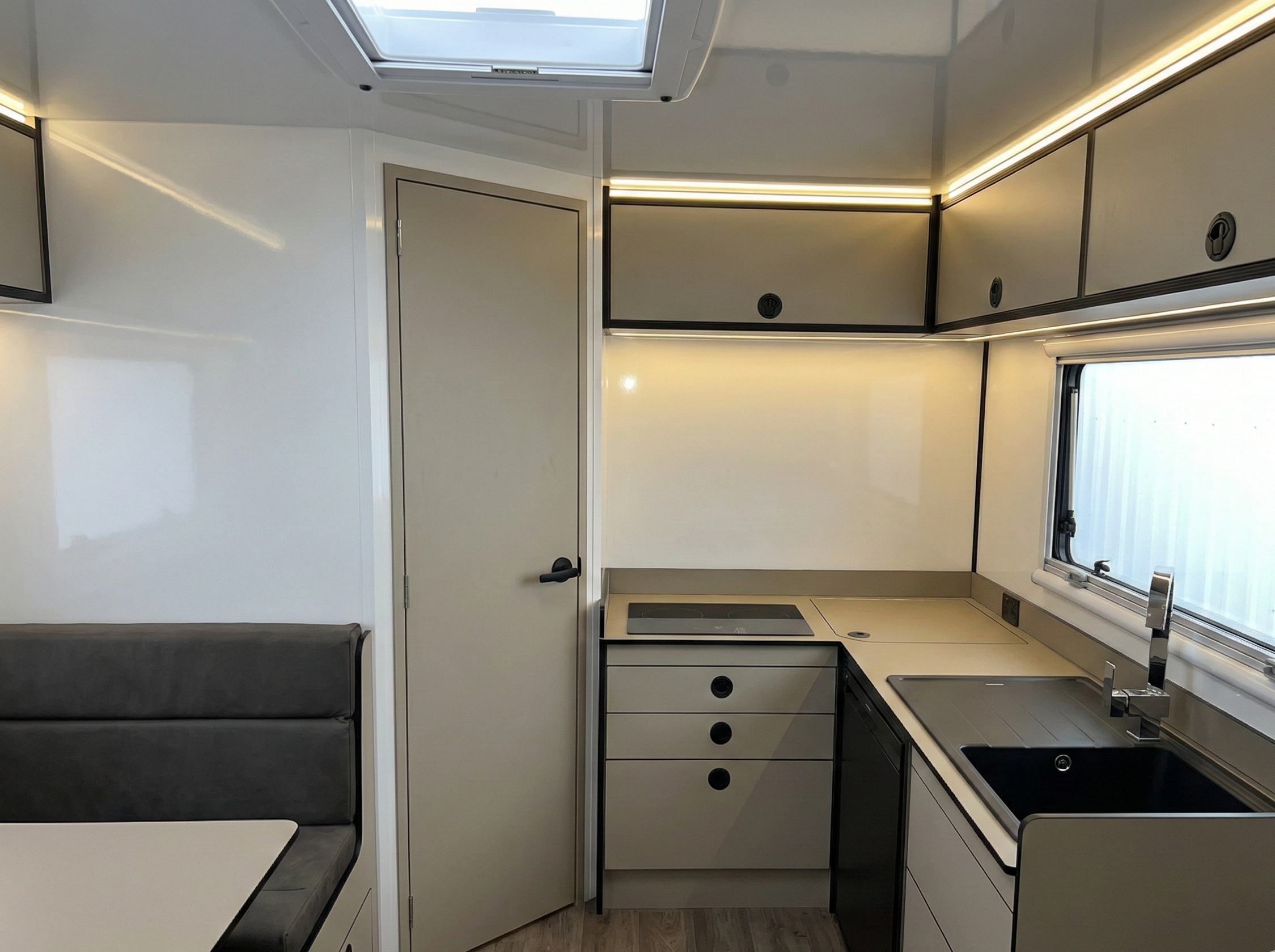
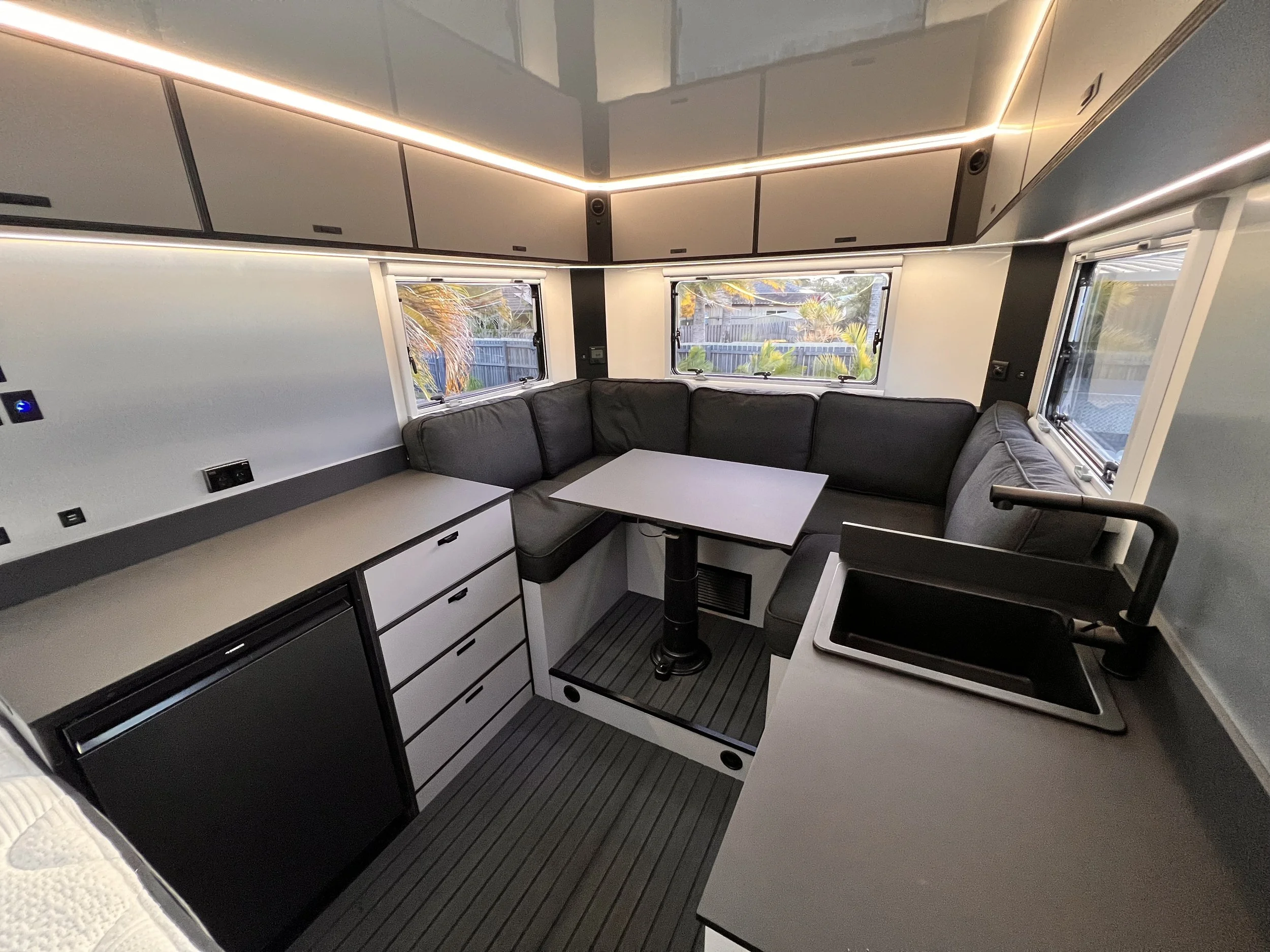
This particular build carries our standard Outback Overlander specification — the same composite construction, power system and plumbing we fit across the Sprinter, Iveco Daily and Isuzu NPS platforms — mounted and finished in-house at our Queensland workshop. Every panel, cabinet and conduit run was built to survive Australian corrugations first, and everything else second.
The result is a truck that looks, at rest, like a tool built for a job — and lives, once the awning's out and the kettle's on, like the most comfortable room in the house.
In The Field
Proven on Australian ground
Our habitat boxes aren't styled for a showroom floor — they're shaped by what actually survives a season of outback travel.
Technical Specification
Outback Overlander — build data
The same engineering standard across every chassis we mount to, this unit fitted to a Fuso Canter 4×4.
Habitation Box — Outback Overlander
CHASSIS: FUSO CANTER 4×4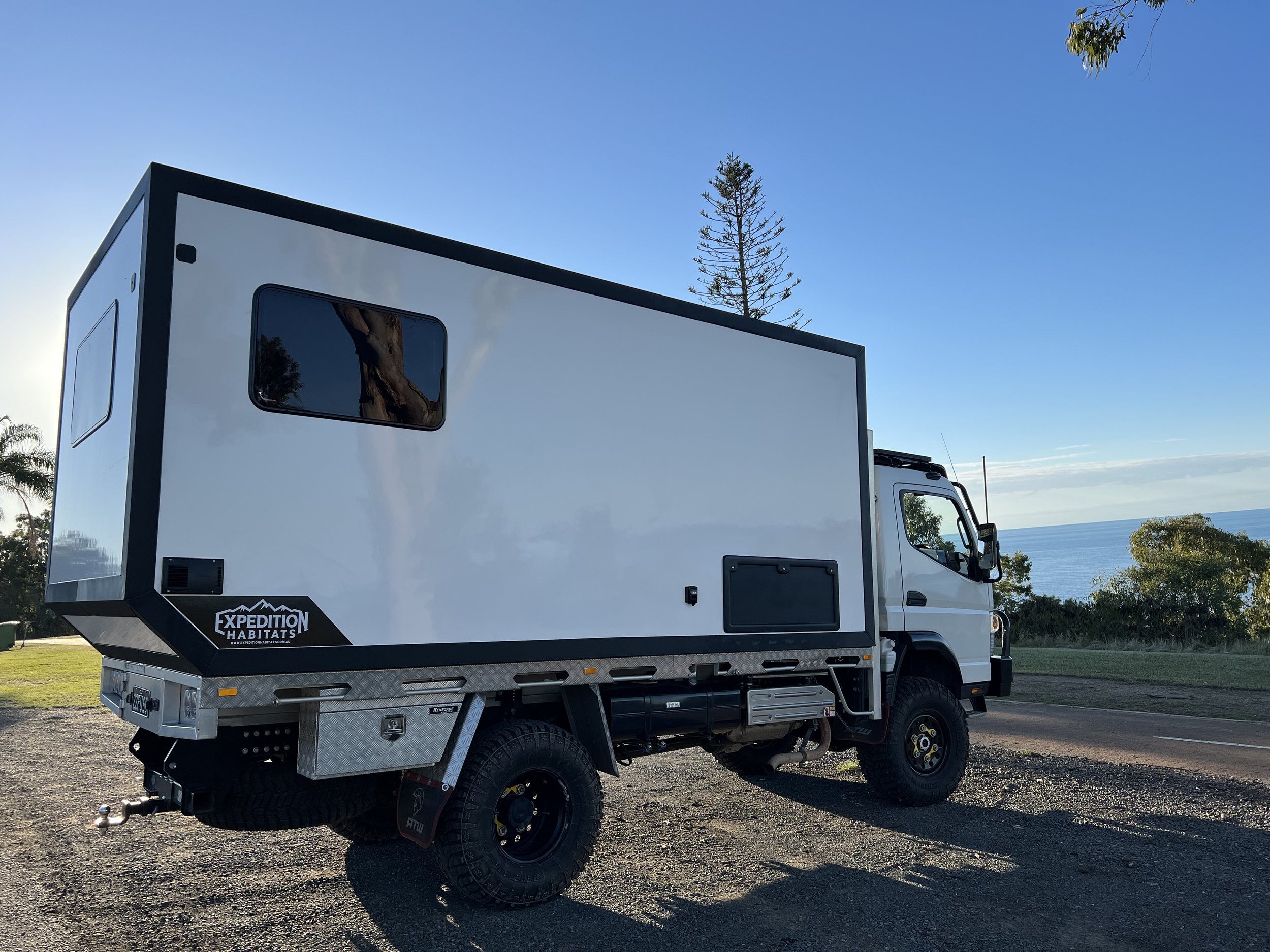
Why We Build It This Way
Thirty years of finding out how these things fail
Long before we built our own boxes, we spent the 1990s and 2000s repairing European composite caravans and motorhomes for brands like Hymer and Dethleffs. That work taught us exactly where those units gave up — almost always at the point where a screw or rivet had been driven straight through composite skin into foam core, slowly working the fibreglass loose from the inside.
Every habitat box we've built since has been designed to engineer that failure mode out entirely. Cabinetry is bonded and dowelled rather than screwed to the shell. Every bolt is Nyloc or double-locked. It's a slower, more deliberate way to build a camper — but it's why our boxes are currently on the ground on multiple continents, not sitting in a workshop for repairs.
"We didn't want to build a caravan that happens to be off-road. We wanted to build the thing that replaces needing one."
Ready When You Are
Bring us your chassis. We'll build the part that makes it home.
Outback Overlander builds start from $100,000 AUD, complete and ready for vehicle integration. Global Overlander specification available for full round-the-world capability.